关于 Activation Regularization
Activation Regularization - serp.ai A Gentle Introduction to Activation
Here, refers to the dropout mask used later in the model, is a scaling coefficient, and is the output of the RNN at timestep . The norm is used to calculate the magnitude of the activations, and the result is scaled by . This encourages small activations, ultimately leading to better performance and generalization in the model.
A Gentle Introduction to Activation 中将 Activation 与 value in feature 画上等号,起初不理解,直到看到下文的:
These internal representations are tangible things. The output of a hidden layer within the network represent the learned features by the model at that point in the network.
之前的理解有局限:对于激活函数之后的下一层、单独看一个激活函数值来说,确实只是一个输入值;但如果考虑整个层输出的激活函数值整体,并且参照当前层的话,实际就是当前层的特征图。从这个角度看,Activation Regularization 是限制特征图里值的大小
activation regularization 的别称 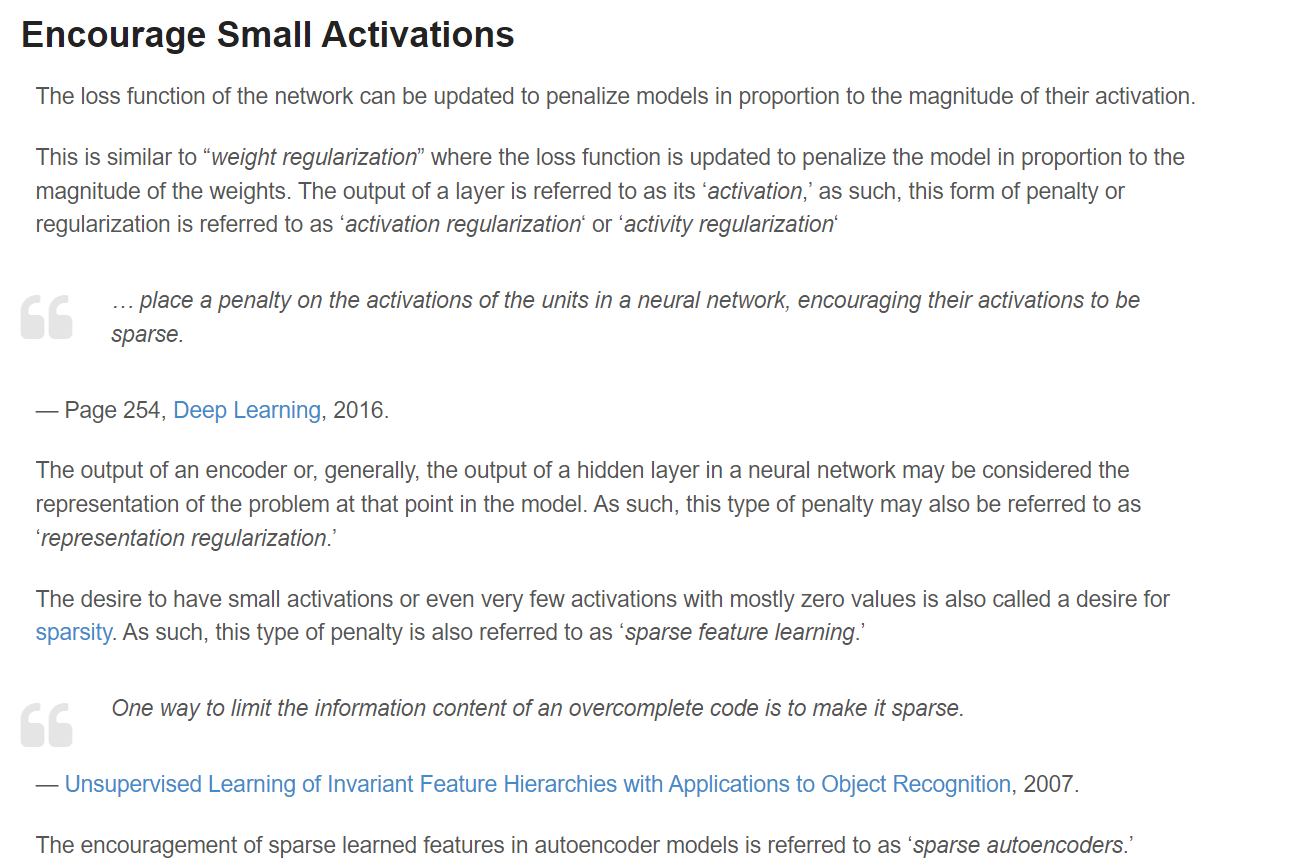
activation regularization、activity regularization、representation regularization sparse feature learning
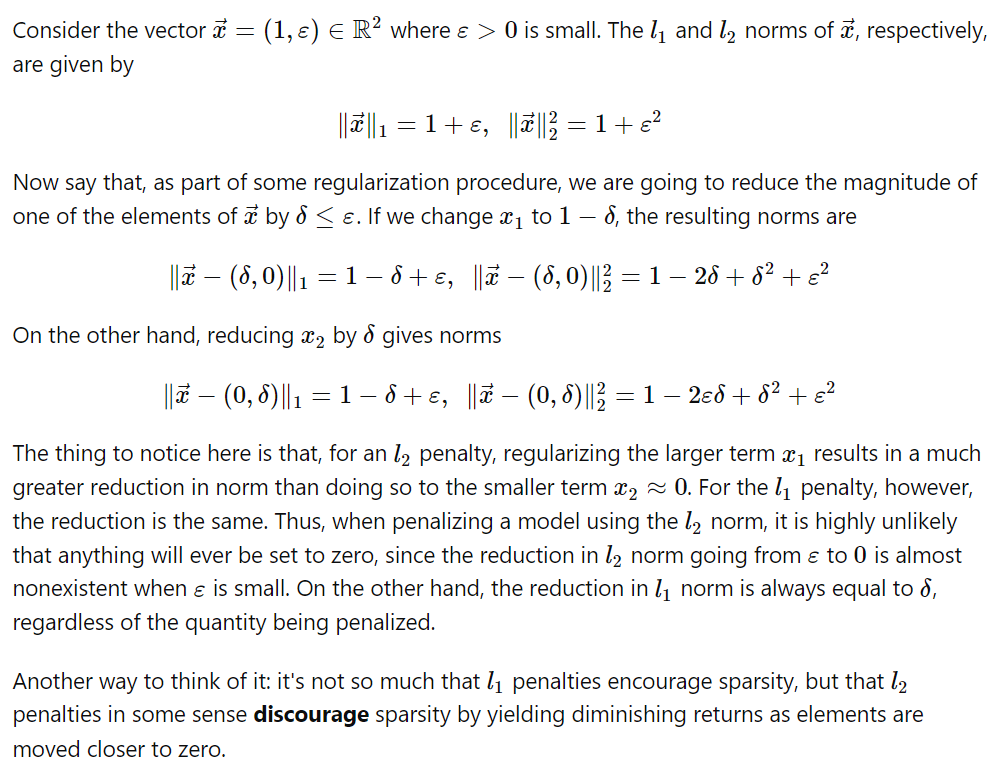
为什么

https://stats.stackexchange.com/questions/45643/why-l1-norm-for-sparse-models 从数值上
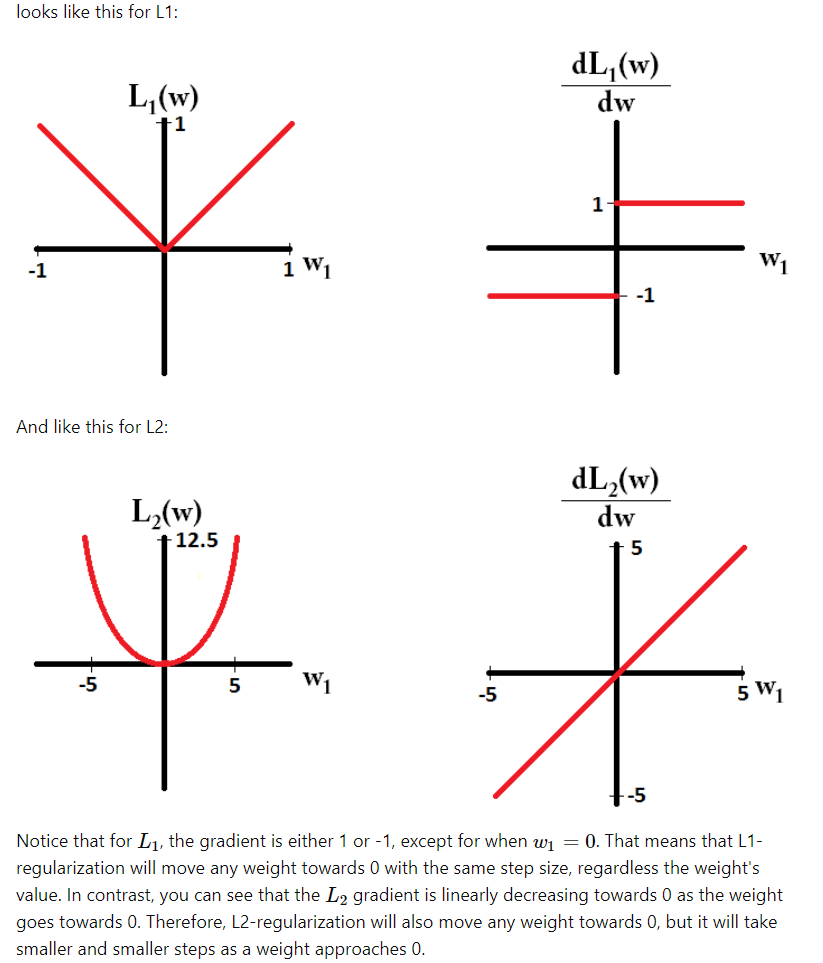
从导数
因为 latent code 也是 activation,所以 AE 更倾向使用 Activity Regularization?

用 AR 的优势是?
压缩时,对于 DCT 来说稀疏矩阵(0 项)有利于提高压缩率,如果用传统方法编码 latent code,加上 AR(增加 activation,亦即 latent code 的稀疏性),可以理解但 autoencoder 不只是用于压缩,使用 AR 的理由是?DCVC 的损失函数没有用正则项,为什么